
Today we continued our mushroom unit study, and we got to dive a little deeper into the fascinating world of mushrooms! Yesterday we started exploring mushrooms, and today we focused on learning about the different parts of a mushroom and how they all work together. One thing I love about nature studies is that there is always so much more going on than what we see at first glance. When we look at a mushroom, we usually notice the cap and stem, but there is actually an entire structure underneath the surface that is just as important!
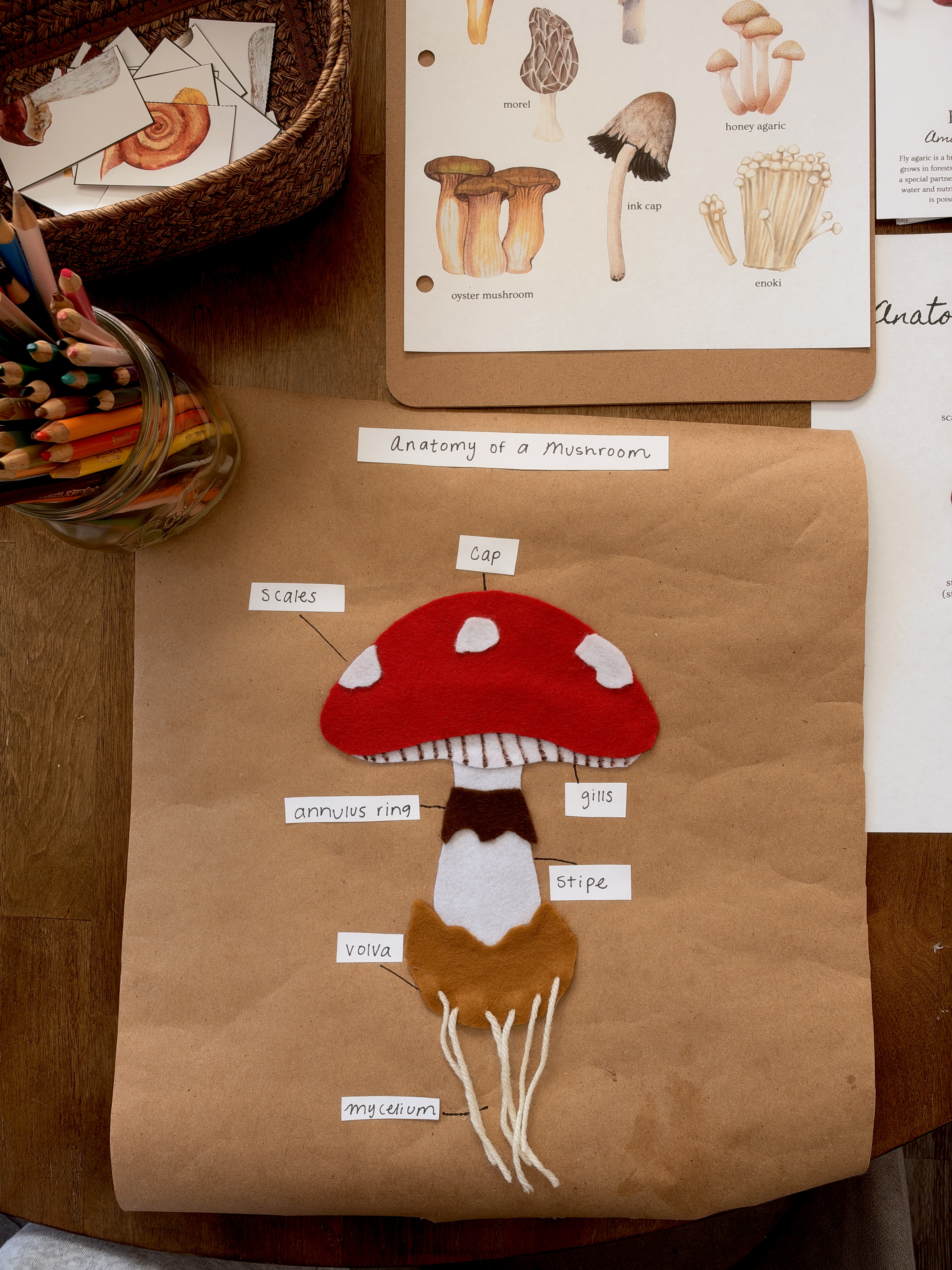
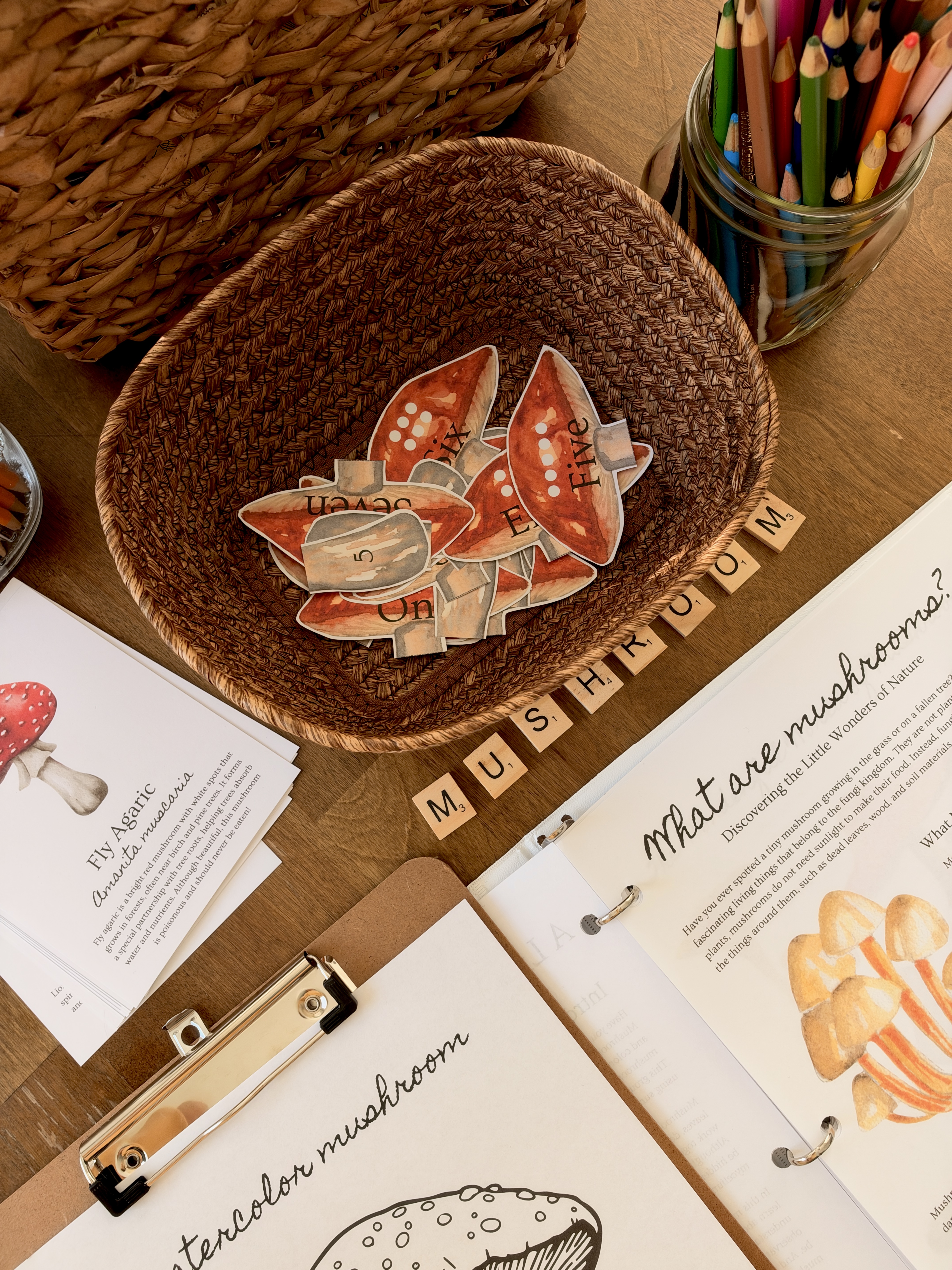
For today’s lesson, we pulled out the mushroom template included in the unit study and turned it into a hands-on project. Instead of simply labeling a worksheet, we decided to build our own mushroom using different materials so we could really see and understand the different parts.
We gathered some felt, yarn, and our template and got to work!
Making Our Mushroom Model

We used felt to create the different parts of our mushroom. This was such a fun way to bring the diagram to life! We were able to use different pieces of felt to represent the mushroom cap, stem, gills, and the structures found below the ground.
One of the parts I really wanted to highlight was the mycelium. This is something kids don’t always think about when they picture a mushroom because most of it is hidden underground.
We used felt and yarn to recreate the mycelium and show how it spreads out beneath the mushroom. Mycelium is made up of tiny threadlike structures called hyphae, which form a network throughout the soil or whatever material the fungus is growing in. It’s almost like the hidden underground part of the mushroom world!
We also added yarn to the volva, sewing it on to help represent the different structures and give our model a little more texture. I love finding ways to use simple craft supplies to make science concepts easier to visualize.

Why We Love Hands-On Science
This is one of those activities that makes me love hands-on learning so much. We could have looked at a picture of a mushroom, read the names of the different parts, and moved on to the next lesson. But actually making our own mushroom gave us a chance to slow down, look at each part, and talk about what we were creating.
When kids can touch, build, cut, and create something related to what they’re learning, it gives them another way to connect with the information. It also makes the lesson feel less like memorizing facts and more like actually exploring and discovering something new.

And honestly, you don’t need fancy supplies to make science engaging! A little felt, some yarn, and a printable template were all we needed for today’s activity.
I also love that we now have a mushroom model we can look back at as we continue our study. As we learn more about fungi, we can keep connecting what we’re discovering to the different parts we put together today.
A Little More About Mushrooms
One of the biggest things I want the kids to understand during this unit is that the mushroom we see above the ground is only part of the story. The mushroom itself is the fruiting body of the fungus. The mycelium is the larger network of threadlike hyphae that grows through the soil, wood, or other material. When conditions are right, some fungi produce mushrooms, which help them release and spread their spores.
It’s pretty amazing to think about how much is happening beneath our feet that we don’t even notice!
Today’s activity was a great way to introduce these structures and help the kids see that mushrooms are much more interesting than they might have originally thought.
I can’t wait to continue our mushroom study and see what else we discover. There is so much to explore in the world of fungi!
🍄 Want to Do This Mushroom Unit Study?
If you’d like to explore the world of mushrooms with your own kids, my Mushroom Unit Study is available in my shop!
I’ve put together the printable lessons, templates, and activities to help make learning about mushrooms fun, engaging, and hands-on. It’s a great addition to your homeschool science lessons, nature study, or a fun unit to work through together.
You can use the activities to explore mushroom anatomy, learn about fungi, and encourage your kids to take a closer look at the fascinating world growing all around them.
Ready to get started?
🍄 Shop the Mushroom Unit Study here!
[CLICK HERE TO PURCHASE AND DOWNLOAD THE MUSHROOM UNIT STUDY]
Happy learning and happy exploring!

Leave a Reply