Preschool learning doesn’t have to mean sitting at a table for hours or completing worksheet after worksheet. Young children learn through play, movement, exploration, and everyday experiences. Some of the best learning opportunities can happen during activities you are already doing at home.
Whether you’re homeschooling your preschooler, looking for something fun to do during the week, or simply want to add more learning into your child’s day, these 15 preschool activities are simple, hands-on, and designed to make learning feel playful.
The goal isn’t to make every activity feel like a formal lesson. Instead, it’s about finding ways to turn everyday play and simple activities into opportunities for your child to explore, practice new skills, and build confidence.
1. Letter Recognition Toddler Learning Journal
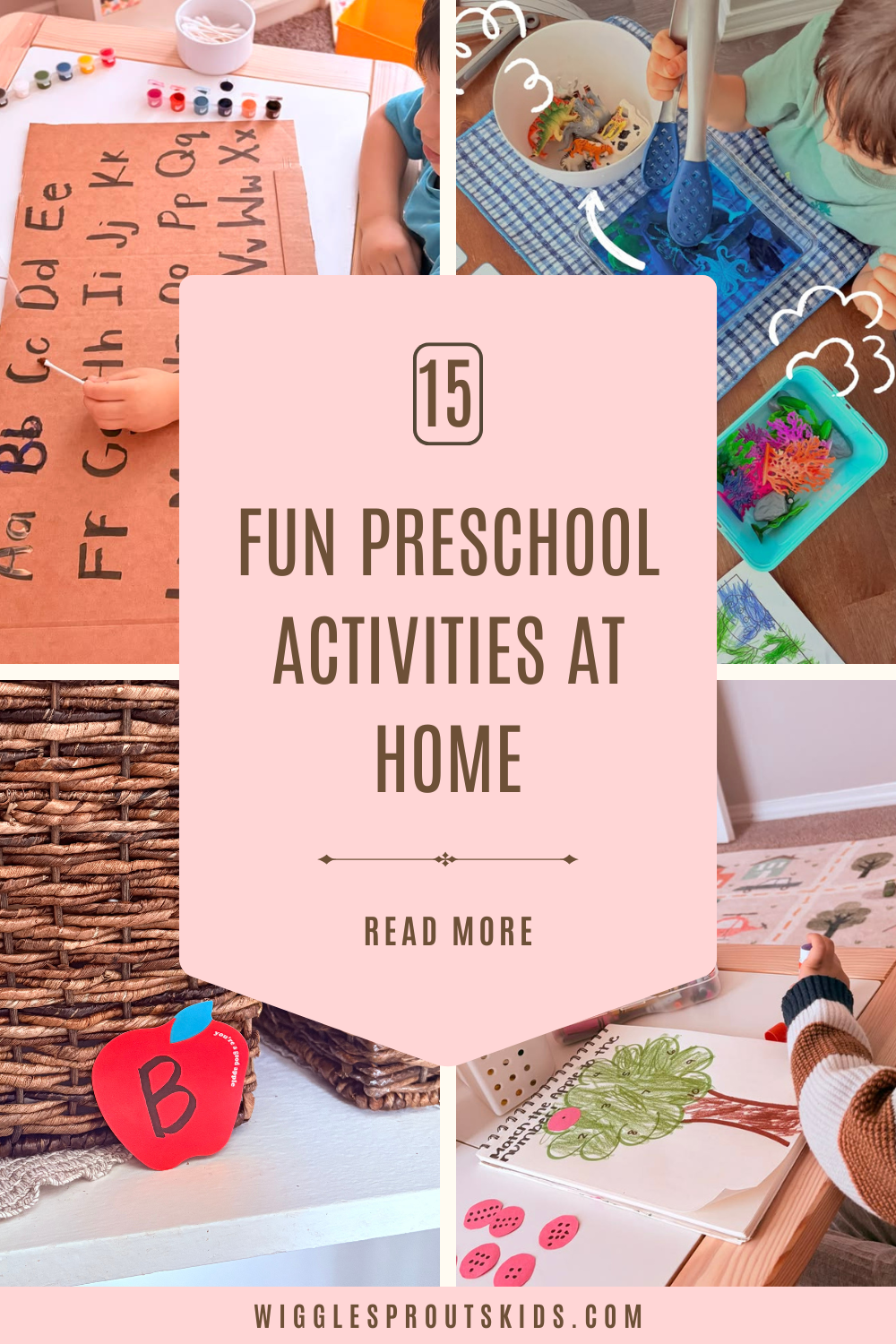
A learning journal can be a simple way to introduce your child to the alphabet. Give your child a page with a letter and encourage them to practice recognizing, tracing, coloring, or decorating it.
You can work on one letter at a time and talk about words that begin with that letter. For younger children, simply pointing to the letter and saying its name is a great place to begin.
Keep the activity short and fun. Your child doesn’t need to complete an entire page in one sitting.
Skills: Letter recognition, vocabulary, fine motor skills, and early literacy.

2. DIY Alphabet Parking Lot
If your child loves cars, turn alphabet practice into a parking lot!
Create several parking spaces and label each one with a different letter. You can then place letters on toy cars and have your child drive each car into the parking space with the matching letter.
You can also call out a letter and have your child find the corresponding parking spot.
This is a great example of using something your child already loves to make learning more engaging.
Skills: Letter recognition, matching, visual discrimination, and fine motor skills.

3. Sort Toys Into the Correct Color Category
Gather some of your child’s favorite toys and turn them into a simple color-sorting activity.
Place different colored pieces of paper on the floor to create your color categories. Then have your child place each toy into the correct color category.
Once everything is sorted, count the toys in each group. You can ask questions such as, “Which color has the most?” or “Which group has the fewest?”
Skills: Color recognition, sorting, counting, categorizing, and comparison.

4. Apple Counting Tree
Turn counting practice into a fun apple activity!
Give your child apples with different numbers of dots inside them, along with a tree that has numbers on it. Have your child count the dots on each apple and place the apple on the correct number on the tree.
For example, if an apple has five dots, your child places it on the number 5.
This activity helps children connect a quantity they can see and count with the written number.
Skills: Counting, number recognition, one-to-one correspondence, and number sense.

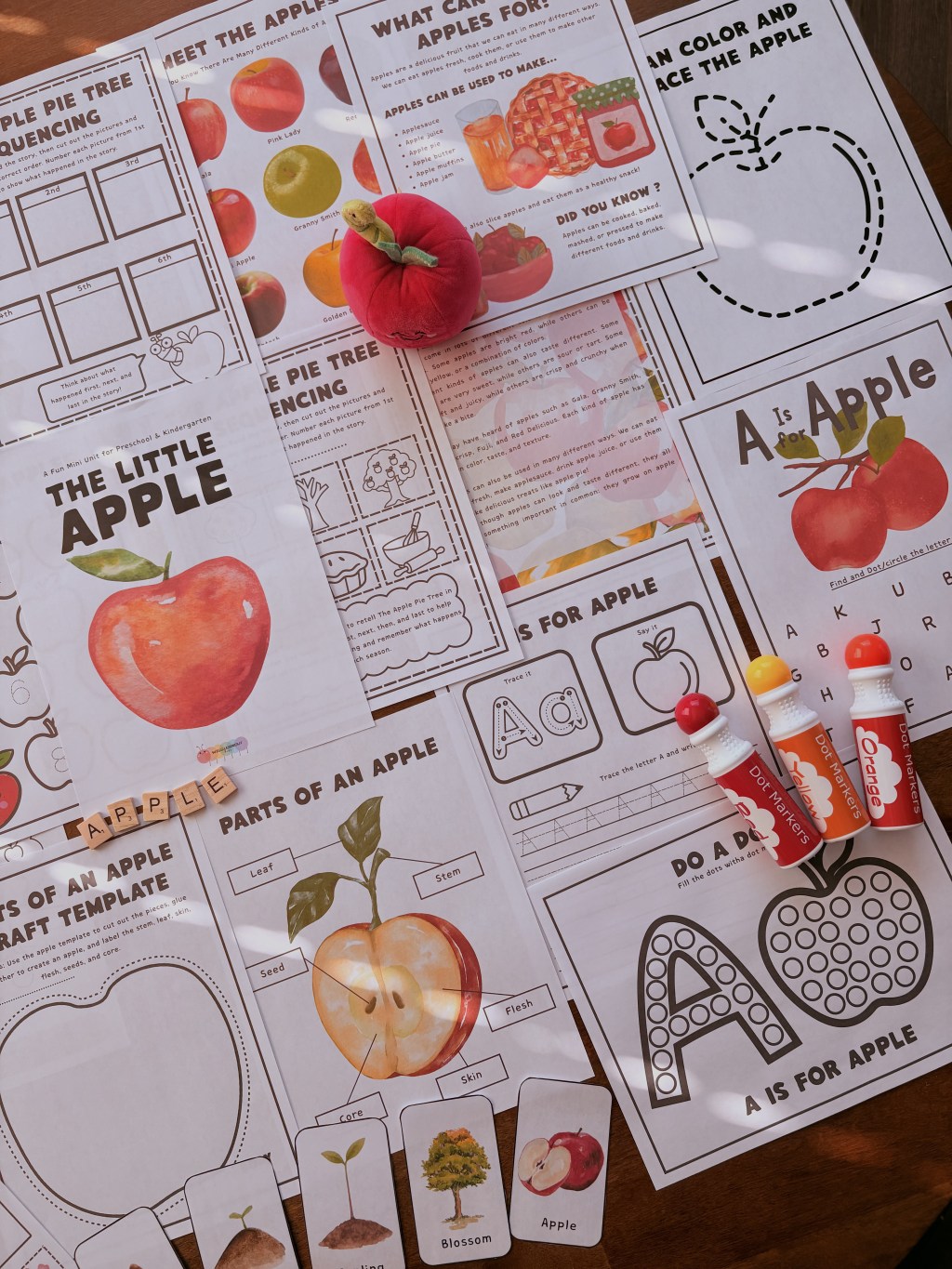
5. Apple Building: Parts of an Apple Craft
Turn learning about apples into a hands-on science craft. Give your child the different pieces needed to build an apple and let them put the pieces together.
As they build, talk about the different parts of an apple, including the skin, flesh, seeds, stem, and leaf.
If you have a real apple available, cut it open and let your child compare the real apple to their craft. Talk about what they notice inside.
Skills: Science, vocabulary, observation, fine motor skills, and following directions.

Want to make this apple craft at home?
Get the Parts of an Apple Template used for this activity and make your own apple craft with your little learner.
[Get the Apple Craft Template Here →]
6. Alphabet Q-Tip Painting
Make alphabet practice a little more exciting with paint!
Write or print large letters of the alphabet on paper. Give your child a Q-tip and some washable paint and have them carefully paint over the letters.
As they trace each letter, encourage them to say the letter name. If they’re ready, you can also practice the sound the letter makes.
This activity gives children an opportunity to practice their letters while strengthening the small muscles in their hands.
Skills: Letter recognition, letter formation, fine motor skills, hand-eye coordination, and early phonics.

7. Apple Letter Matching
Bring your apple theme into alphabet learning with an apple letter-matching activity.
Give your child uppercase and lowercase apple letters and have them find the letters that belong together.
For example, your child can match lowercase a with uppercase A. Continue with different letters and encourage your child to name each letter as they make a match.
Skills: Letter recognition, uppercase and lowercase matching, visual discrimination, and early literacy.
8. Color the Matching Lowercase Letter
Another simple activity for a toddler or preschool learning journal is matching uppercase and lowercase letters.
Give your child a page with an uppercase letter and several lowercase letters. Have them color the lowercase letter that matches the uppercase letter.
For younger children, start with only a few choices. You can say each letter aloud together and help your child identify the matching lowercase letter.
This activity is a simple way to practice letter recognition without making the activity feel overwhelming.
Skills: Uppercase and lowercase recognition, visual discrimination, fine motor skills, and early literacy.

9. Read a Book, Then Cook or Bake Together
One of my favorite ways to make learning meaningful is to connect a book to a real-life activity.
Choose a children’s book that includes food, cooking, or baking and then create something together that connects to the story.
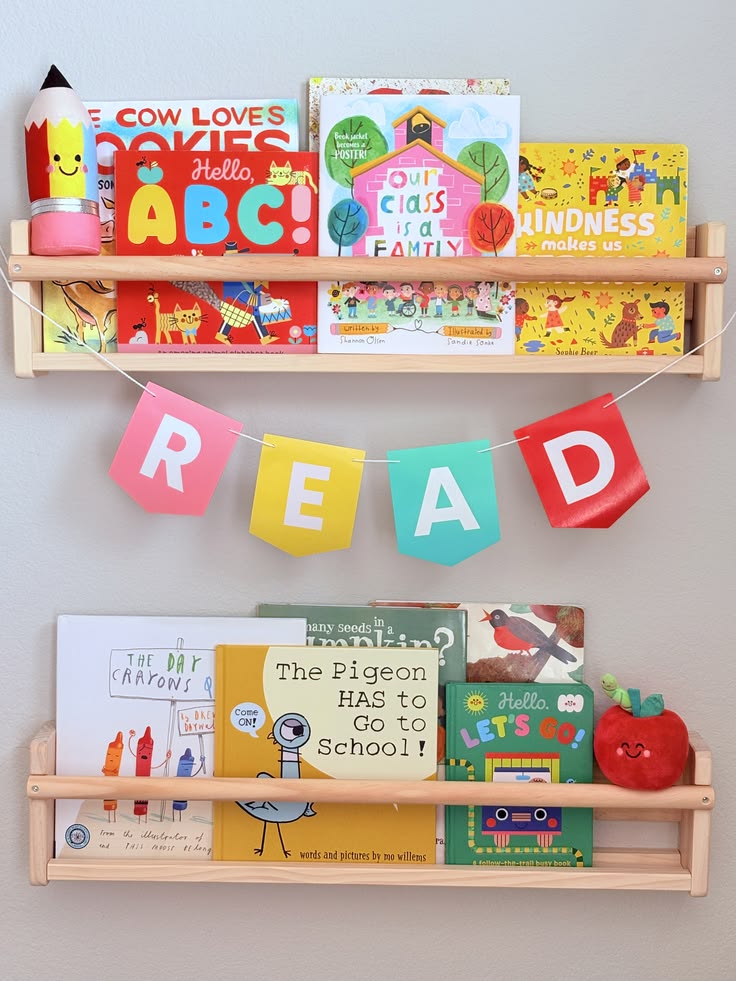
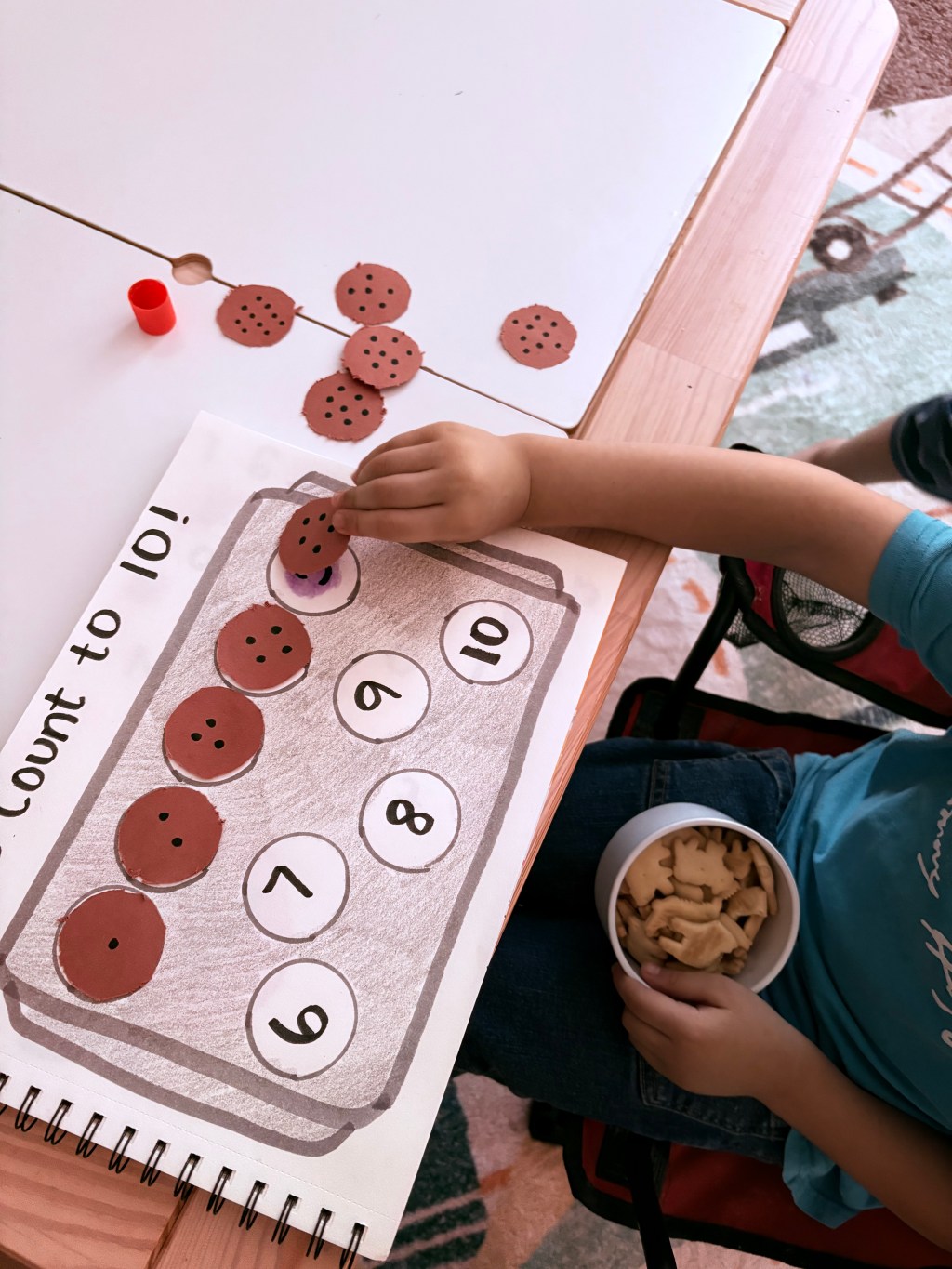
For example, after reading The Cow Loves Cookies, you can make cookies together. Let your child help with simple, age-appropriate steps such as pouring ingredients, stirring, counting scoops, or placing cookies on the baking sheet.
This allows your child to take something they heard in a story and experience it in real life. You can practice counting, measuring, following directions, sequencing, and vocabulary all while spending time together.
The goal isn’t to make perfect cookies. It’s about giving your child the opportunity to learn through doing.
Skills: Counting, measuring, vocabulary, sequencing, following directions, fine motor skills, and real-world learning.

10. Nature Color Hunt
Take your preschooler outside and choose a color to search for.
Ask your child to find something green, yellow, brown, or another color. Talk about what they find and encourage them to describe the objects.
You can turn a simple walk around the yard or neighborhood into a fun learning experience.
Skills: Observation, color recognition, vocabulary, science, and communication.
11. Shape Hunt Around the House
Go on a shape hunt around your home and look for circles, squares, rectangles, and triangles.
A plate might be a circle, a book might be a rectangle, and a window might be a square or rectangle.
As your child finds different objects, ask them to identify the shape. You can also talk about how different shapes are used in everyday objects.
Skills: Shape recognition, observation, vocabulary, and visual discrimination.
12. Sink or Float
Fill a container with water and gather several objects that are safe to place in the water.
Before putting each object into the water, ask your child:
“Do you think it will sink or float?”
Let your child make a prediction and then test it. Talk about what happened afterward.
This simple activity introduces your child to making predictions and observing results.
Skills: Science, prediction, observation, and critical thinking.

13. Story Sequencing
Choose one of your child’s favorite books and read it together.
Afterward, talk about what happened at the beginning, middle, and end of the story. Ask questions such as:
- What happened first?
- What happened next?
- What happened at the end?
- Who was in the story?
You can also have your child draw three pictures showing different parts of the story and put them in the correct order.
Skills: Reading comprehension, sequencing, memory, communication, and storytelling.
14. Build With Blocks
Give your child a collection of blocks and let them build whatever they imagine.
You can also give them a simple challenge, such as building the tallest tower, making a house for a toy, or creating a bridge.
Count the blocks together and talk about their different shapes and sizes.
Skills: Problem-solving, counting, spatial awareness, creativity, and fine motor skills.
15. Alphabet Letter Hunt Around the House
Turn letter recognition into a scavenger hunt! Choose a letter and invite your child to look around the house for objects that have or begin with that letter.
For example, if you’re learning the letter B, your child might find a book, ball, blanket, or basket. You can also write letters on small pieces of paper and hide them around the house for your child to find.
As your child finds each letter, have them say the letter name and, if they’re ready, practice its sound.
Skills: Letter recognition, beginning sounds, vocabulary, observation, and early literacy.

Learning Doesn’t Have to Feel Like School
One of my favorite things about preschool learning is that it doesn’t have to look like school.
A child can learn letters while painting with a Q-tip, practice counting while placing apples on a tree, learn colors while sorting their favorite toys, and practice math and following directions while baking cookies with Mom.
These everyday moments can become meaningful learning experiences when we slow down, involve our children, and let them be part of the process.
At Wiggle Sprouts Kids, I believe learning can be playful, simple, and meaningful. You don’t need hours of preparation or complicated materials to create valuable learning experiences for your child. Sometimes the best learning happens with the things you already have at home and a little imagination.
So the next time you’re wondering what to teach your preschooler, remember that learning can happen anywhere—during playtime, while reading a book, in the kitchen, outside, or even while playing with their favorite toys.
Learning doesn’t have to be complicated. It can simply be play.
Looking for more playful learning activities?
Explore our preschool printables and unit studies for simple, hands-on activities you can use at home.

 WiggleSproutsKids
Leave a comment